What Vibe Coding Means for Software Developers: Benefits, Limits, and a Shift in How We Work
A practical reflection on why vibe coding became such a hot topic, how a developer’s role is changing, and why code quality systems matter even more in the age of AI coding tools.
Korean version: 바이브 코딩이란? 소프트웨어 개발자가 바라본 장점, 한계, 그리고 일하는 방식의 변화
If I had to name one of the hottest topics in software right now, vibe coding would be high on the list.
What makes it especially interesting is that it is not just a developer topic. It has become a strong point of curiosity for both developers and non-developers — but for very different reasons.
- For developers, it is both a productivity tool and something they instinctively want to test: how far can this thing really go?
- For non-developers, it relieves a long-standing frustration: the inability to touch parts of software that used to feel completely inaccessible.
Because of that, vibe coding has become more than just a workflow trend. In many conversations, people now evaluate LLMs partly by asking a simple question: how well does it vibe code?
I have also tried a wide range of vibe coding tools as a software developer. But the more I used them, the less interested I became in the question of which tool is best. The more useful question, at least to me, became this:
How should a developer actually use these tools well?
That is what I want to explore in this post.
What people are really asking
When people search for this topic, they are usually trying to answer questions like these:
- Is vibe coding ultimately a path toward replacing developers?
- How should developers use these tools to improve productivity without losing control?
- If AI keeps changing code through natural language instructions, does code quality eventually collapse?
- What does the developer’s role become in a vibe coding world?
The short answer first
My view is that vibe coding is not really a tool that removes developers. It is much closer to a tool that shifts the center of gravity of a developer’s work and responsibility.
There was a time when a lot of differentiation came from how quickly and accurately someone could produce code directly. That still matters, but it is no longer the whole story.
What is becoming more important now is the ability to:
- define problems more clearly
- give better change directions
- review outputs more rigorously
- design systems that keep quality from falling apart
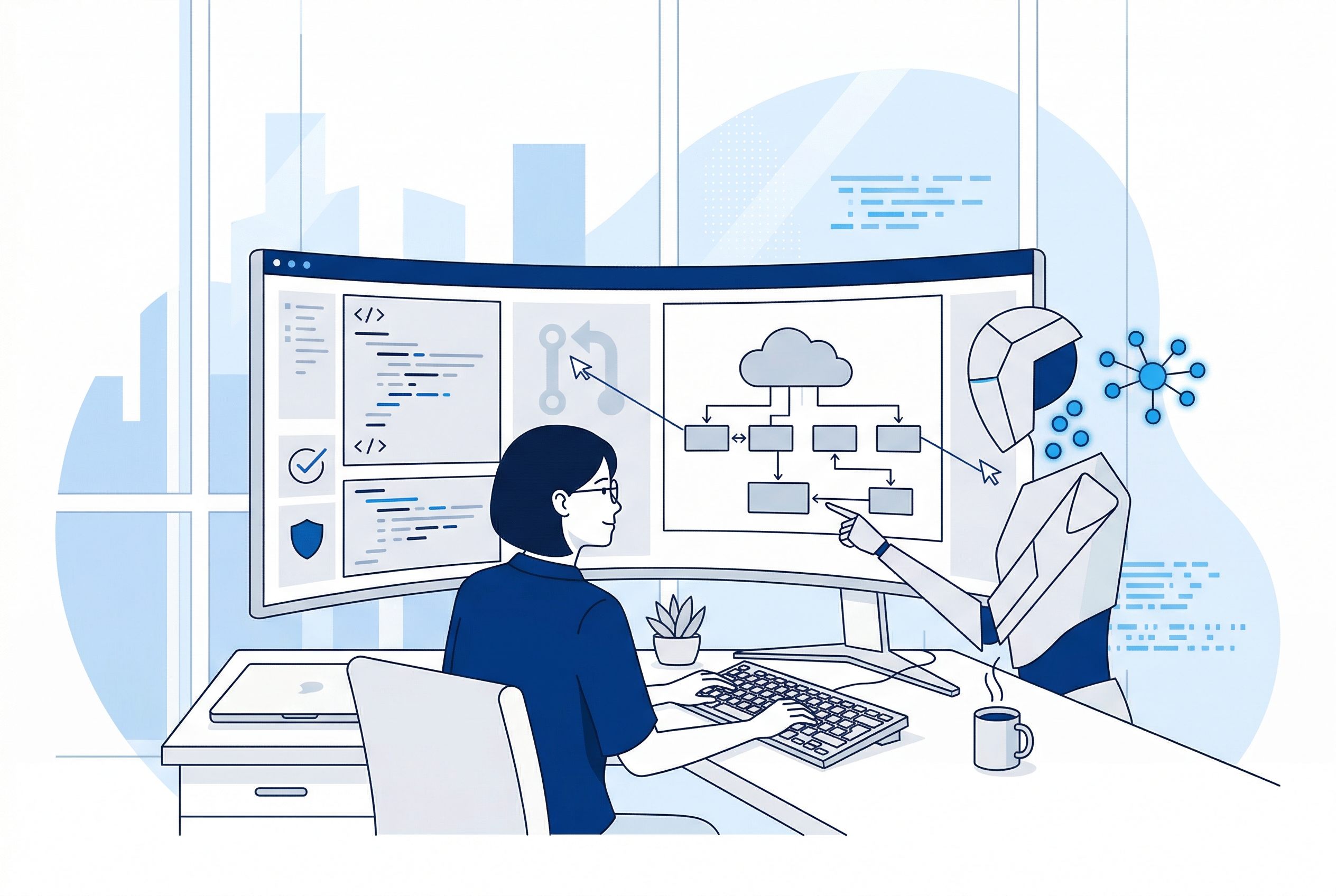
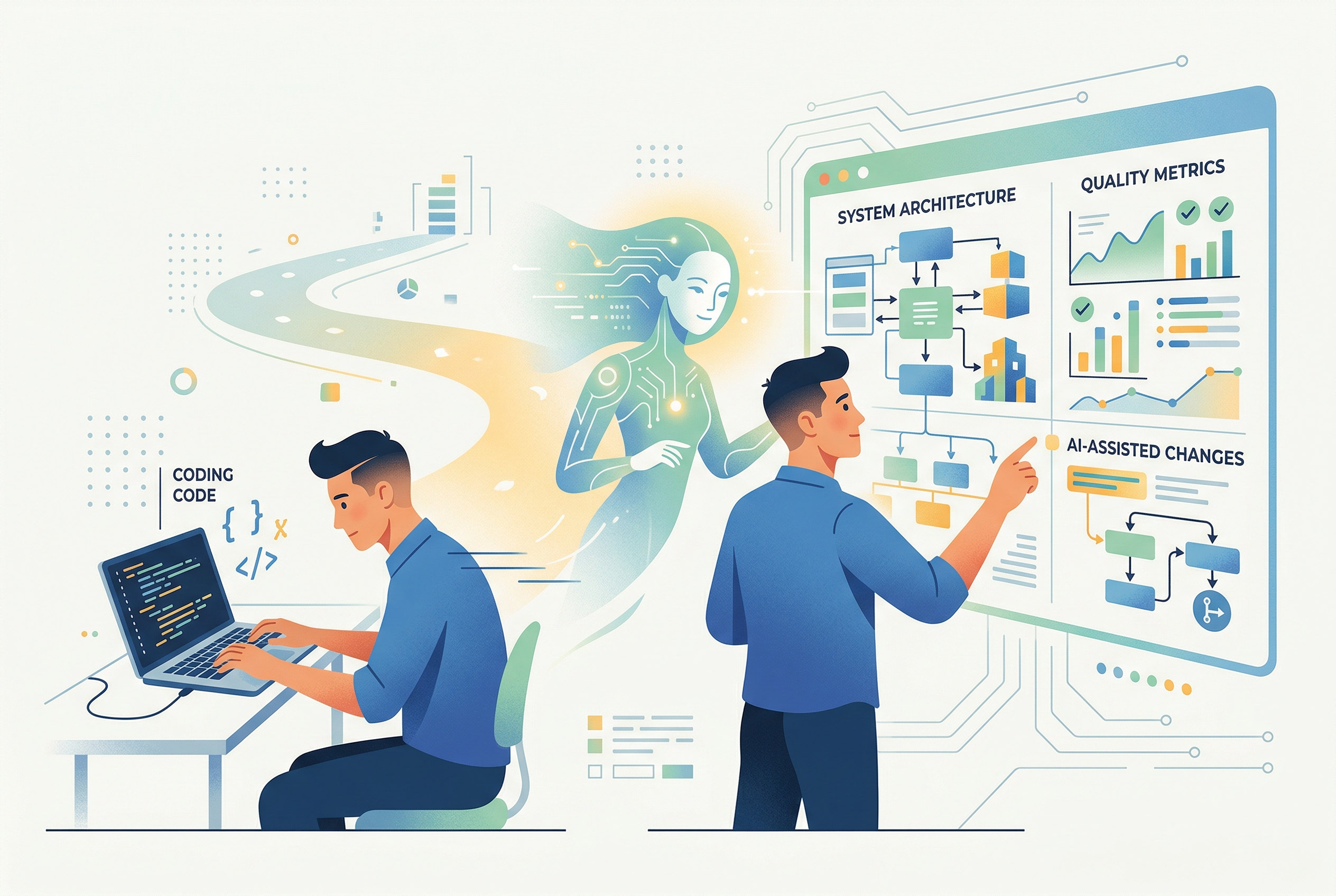
In that sense, the developer in a vibe coding era is becoming less of a pure producer and more of a director, reviewer, quality manager, and final owner.
Why vibe coding spread so quickly
This trend is not growing only because it is fashionable. It is growing because it creates obvious value for both developers and non-developers.
For developers, it is a productivity tool and an experiment
From a developer’s point of view, the appeal is obvious.
- it reduces time spent on repetitive code
- it accelerates familiar implementation patterns
- it produces rough drafts for tests, docs, and refactoring very quickly
But there is also another emotion mixed in: skepticism.
Something like:
People say it’s good. Fine — let’s see how far it actually goes.
That mindset matters. Developers rarely use these tools passively. They evaluate them, compare them, challenge them, and verify them.
For non-developers, it lowers the barrier to entry
For non-developers, the value is often even more direct.
For a long time, many people had ideas for automation, internal tools, or small apps, but they could not act on those ideas because coding was too far outside their reach.
Vibe coding lowers that barrier.
- small automation scripts
- internal prototypes
- repetitive task helpers
- lightweight web pages or app drafts
These move from “I wish I could build this” to “let me at least try.”
That is a big shift, because coding starts to become less of a gated specialty and more of a broader interface for problem solving.
The biggest change I felt as a developer
One of the strangest things about using vibe coding tools seriously is the feeling you get when AI writes code and opens a PR.
At times, it genuinely feels like a teammate or junior engineer has submitted work for review.
- some parts are surprisingly fresh
- some parts are impressively clever
- and some parts are astonishingly dumb
That mix is what makes the experience interesting.
It does not feel like a cold machine simply dumping output. It often feels more like working with a capable but still unreliable junior teammate.
That is one reason I sometimes think of this as a new form of pair programming.
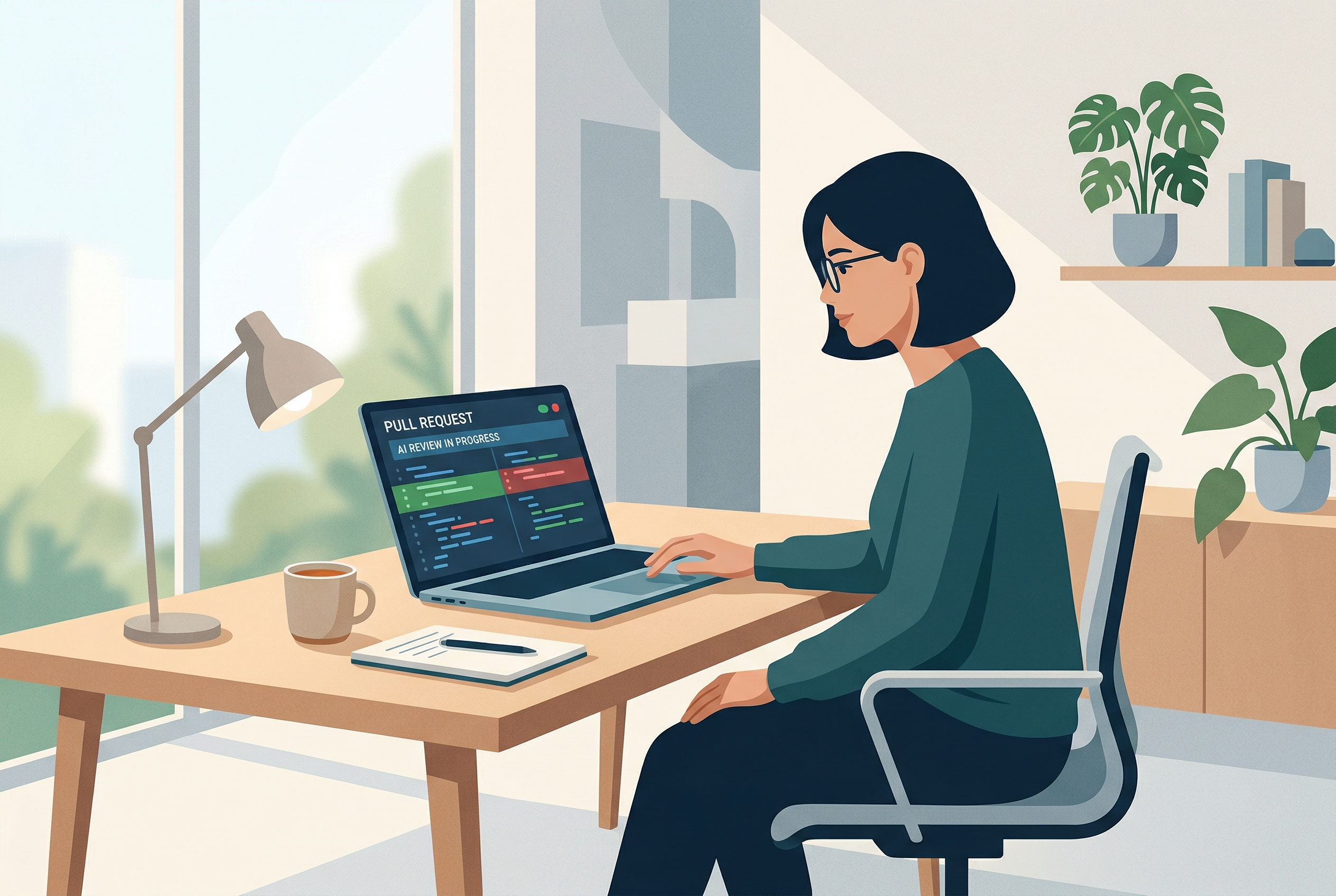
The difference is that I am no longer always the person doing most of the typing. More and more, I become the person doing the filtering, reviewing, and steering.
How the developer role is changing
In the past, a lot of engineering value was tied to one question:
How quickly, accurately, and consistently can you write working code yourself?
That still matters. Reading and writing code remains fundamental. But in practice, the role is slowly shifting toward a different set of strengths.
1. Problem definition
AI is extremely good at misunderstanding vague instructions.
That means the real skill is not just speed of implementation. It is the ability to define:
- what problem is actually being solved
- where the requirement boundaries are
- what constraints matter
- what should not be touched
Good output often begins with good problem definition rather than good coding alone.
2. Review ability
The more code vibe coding tools produce, the more important it becomes to judge that output well.
- does the code actually satisfy the requirement?
- did it miss edge cases?
- does it violate system conventions?
- is it dangerous from a performance, security, or operational perspective?
Without that review ability, what looks like productivity can easily become a faster way to accumulate technical debt.
3. Quality management
The biggest problem with AI-generated code is not simply that it is sometimes wrong.
In my experience, the more common issue is this:
if natural-language-driven changes keep piling up, code quality tends to degrade in very visible ways.
At first, the changes often look fine. But after enough iterations, the structure starts to drift.
- duplicate code grows
- consistency weakens
- responsibilities blur
- naming and abstraction levels become unstable
- tests stop evolving cleanly with the implementation
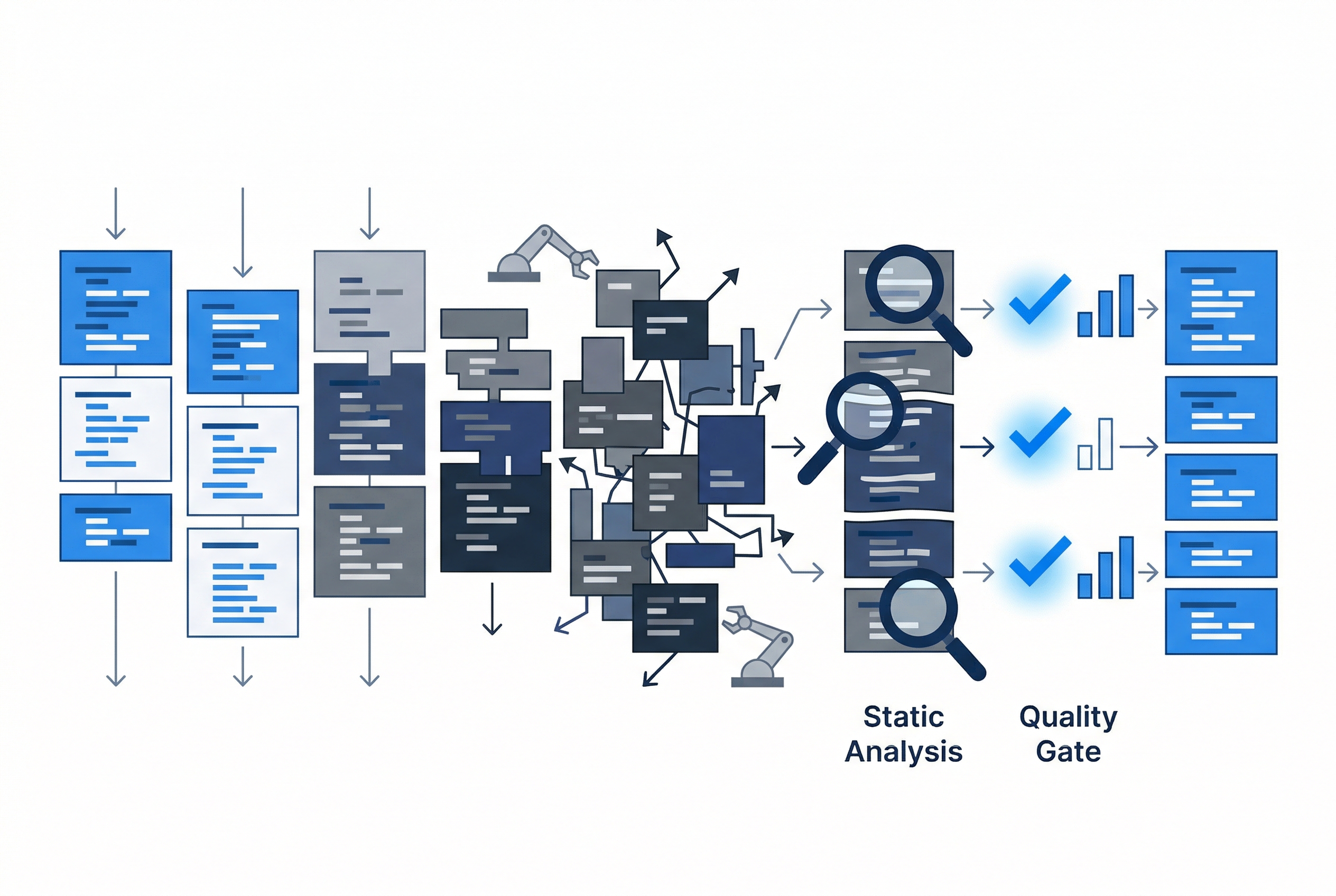
So vibe coding can speed up code production, but it can also speed up code decay.
Why clean code matters even more now
Ironically, vibe coding does not make clean code principles less important. It makes them more important.
When humans write code by hand, the writing process itself often acts as a thinking process. Once AI compresses much of that middle layer, the human has to manage structure more deliberately at the end.
That makes principles like these even more valuable:
- clear separation of responsibilities
- consistent naming
- duplication control
- clear abstraction boundaries
- testability
- review-friendly code style
These are no longer just “nice principles good developers follow.” They become structural safeguards that keep AI-assisted code from drifting into a mess.
Why static analysis and quality gates become more important
I have also experienced the code quality problem directly.
When you repeatedly instruct a tool in natural language, then revise the result, then revise it again, code can become strange surprisingly quickly. It may still run, but it becomes harder to read, harder to maintain, and less coherent over time.
That is exactly why teams end up leaning more heavily on:
- static analysis tools
- linters
- formatters
- automated tests
- quality gates in CI
In practice, that means things like:
- blocking basic style and syntax issues with linters
- enforcing consistency with formatters
- using type checks to reduce ambiguous changes
- preventing regressions with automated tests
- detecting complexity and likely bugs through static analysis
- rejecting low-quality PRs automatically before merge
So as vibe coding gets stronger, humans do not become less important. If anything, the value of people who can design strong quality systems becomes higher.
Is vibe coding a threat to developers?
This question comes up often, but I think the framing is slightly off.
I see it less as a threat and more as a role reshaping.
Of course, areas built around repetitive implementation will feel more pressure. But real software development has never been only about repetitive implementation.
Actual work always includes things like:
- interpreting requirements
- understanding system constraints
- reading domain context
- accounting for operational realities
- ensuring quality
- anticipating failure modes
- making code sustainable for a team over time
AI can help with parts of that. It does not own the whole thing.
That is why I think the future developer is not simply “someone who writes code well,” but someone who can turn AI-produced output into a healthy system.
How developers should use vibe coding well
My practical approach would look something like this.
1. Use it aggressively for first drafts
It is genuinely strong at boilerplate, repetitive implementation, test drafts, documentation drafts, and refactoring suggestions.
2. Keep control of core architecture and boundaries
Architecture boundaries, data models, security-sensitive logic, performance-critical paths, and operational risk areas still need strong human ownership.
3. Review everything seriously
AI-generated code should not be reviewed more loosely. If anything, it deserves stricter review.
4. Automate quality gates
A strong system beats good intentions. It is better to make bad output fail automatically than to rely on human energy every single time.
5. Learn the collaboration skill itself
It is no longer enough to learn only languages and frameworks. The ability to collaborate effectively with AI is gradually becoming part of engineering skill itself.
In the end, the real issue is not the tool but the attitude
There are already endless debates about which vibe coding tool is best.
Of course, they are not identical. Some are better at opening PRs, some are better at refactoring, and some are better at contextual understanding.
But over time, I think the more important variable is not the tool name. It is the developer’s attitude and system around the tool.
- what should be delegated?
- how far should delegation go?
- what must be verified?
- what separates acceptable output from unacceptable output?
Without those standards, vibe coding can create a short-term speed boost that turns into a larger long-term cost.
Final thought
The world is clearly changing.
And software developers probably need to change the way they work along with it.
To me, vibe coding is not a magical replacement for developers. It is much closer to a tool that pushes developers toward a higher level of responsibility.
It shifts the role from:
- the person who produces the most code directly
toward:
- the person who defines problems more clearly
- reviews outputs more carefully
- protects quality more deliberately
- and keeps the overall system healthy
That is why I plan to keep using vibe coding tools. But I do not think of them simply as convenient tools that write code for me.
I think of them more as partners that force me to redefine what my role as a developer actually is.
And maybe that is the real story here.
Maybe this is not just the next step in automation. Maybe it is a form of automation that makes human judgment even more important in software development.